The Ford Ranger is the most commonly used light commercial vehicle in Australian construction. It is also, currently, only available with an internal combustion engine in configurations suited to construction work. Vertical Matters is researching whether a standardised electric drivetrain conversion kit can be developed that makes EV adoption viable for construction fleet operators without requiring vehicle replacement.
The research question:
Can a bespoke EV conversion architecture be designed for the Ford Ranger platform that achieves strict operational equivalence with diesel baselines? Specifically, we are testing the architectural limits of towing capacity, torque delivery under continuous load, and Battery Management System (BMS) compatibility with the intermittent and unstructured charging infrastructure typical of temporary construction sites.
Research approach:
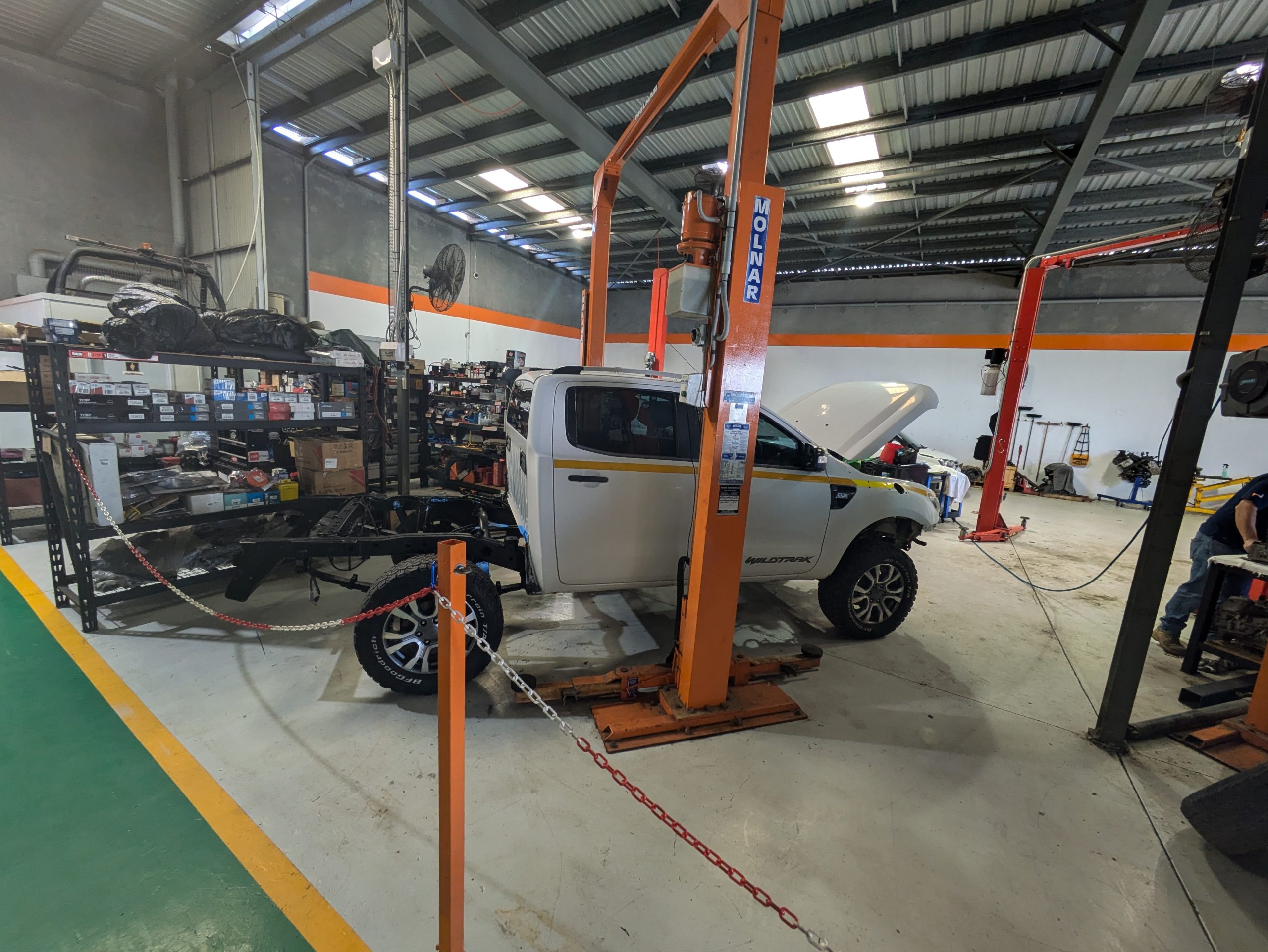
Working closely with industry partners based in QLD, Vertical Matters is commissioning the assembly of a prototype testbed. The technical challenge lies in the complex integration of disparate hardware, specifically aligning international electric motor packages and control systems with domestic battery supplies and a custom BMS satellite architecture.
This prototype is being subjected to rigorous diesel equivalence testing. We are capturing continuous telemetry on charge cycle degradation, dynamic towing performance, and productivity output under stress, benchmarking these metrics directly against historical data from internal combustion vehicles operating under identical construction load conditions.
Current status:
As of early 2025, component procurement is complete for the primary drivetrain. Battery pack sourcing is underway through domestic suppliers. Assembly is in progress at the QLD automotive facility. Skilled EV mechanic availability in regional Queensland has been identified as a constraint on assembly timelines, itself a research finding with implications for the industry’s transition readiness.
The completed prototype will undergo performance trials against the benchmark dataset. Findings will be published through this research program.